

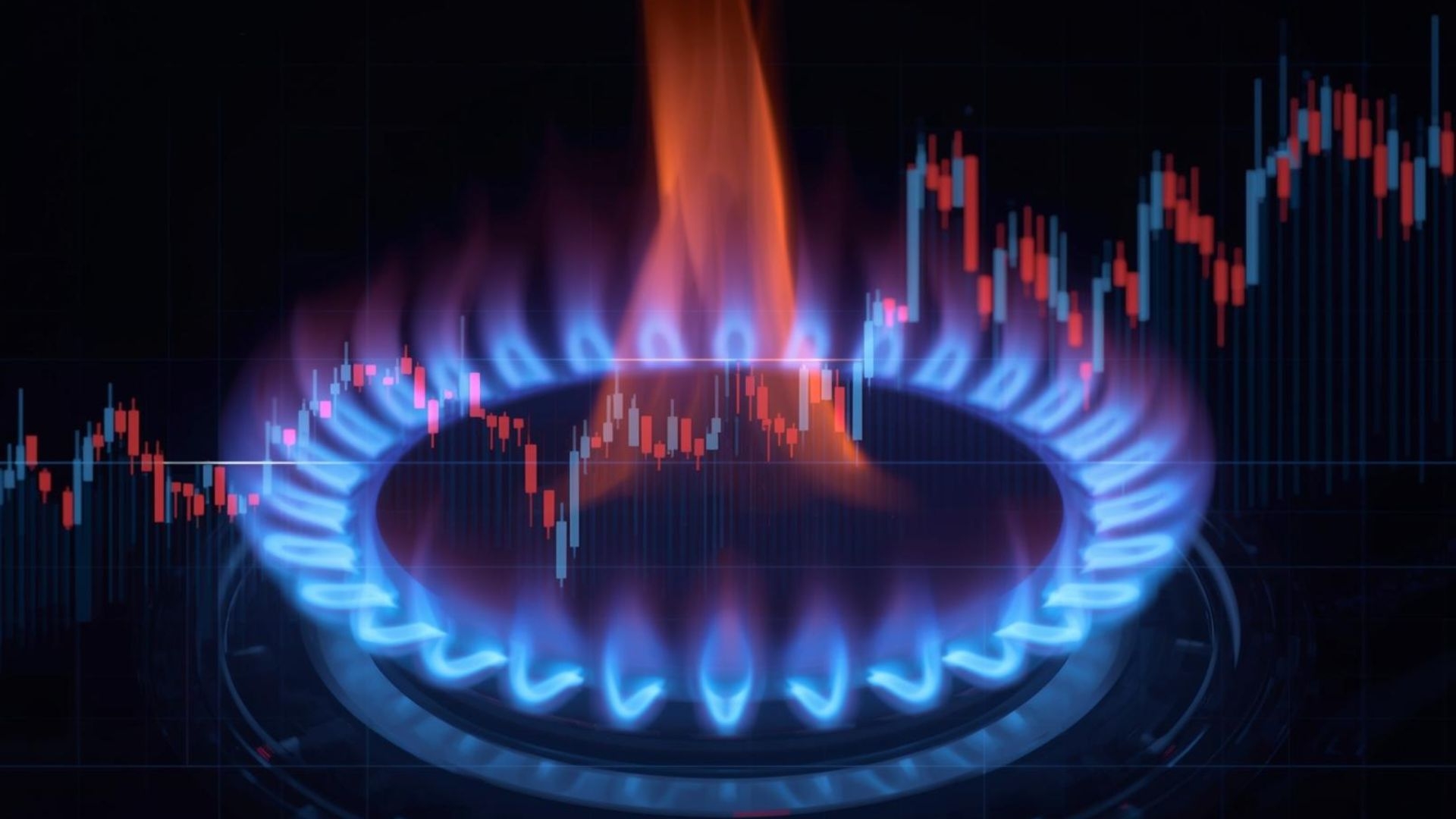
Natural gas trading: How to trade natural gas
Learn the fundamentals of trading natural gas, including how it works, trading strategies and more.
* Trading is risky. Your capital is at risk.
Natural gas is a naturally occurring fossil fuel and one of the world's cleanest energy sources.
Because of its vital role in global power generation, it experiences significant price fluctuations, making natural gas trading highly popular among investors looking for market opportunities. Whether you are navigating supply shifts or seasonal demand, understanding this dynamic commodity is key,
In this beginner's guide we'll cover everything you need to know to trade natural gas.
Key takeaways
Candlestick charts are popular in forex to get a quick, easy to follow overview of price movements
The 'candles' show an instrument's open and closing price, as well as the high and low for the period
Candles are green (or 'light') when the price went up, and red (or 'dark') when the price went down
What is natural gas?
Natural gas is a fossil fuel that’s extracted from the ground. It’s often mistaken for a by-product of crude oil – like gasoline or heating oil – but it’s not. It just exists alongside oil reserves.
Natural gas currently represents around a quarter of the EU's overall energy consumption. About 26% of that gas is used in the power generation sector (including in combined heat and power plants), and around 23% in industry.
Once it’s been extracted, natural gas needs to be treated and processed into other gas or liquid forms to make it suitable for transport across countries. So, while it’s a cheap, naturally occurring energy source, the extraction and treatment process is costly.
Natural gas is one of the cleanest energy supplies due to its low carbon dioxide emissions when burnt. It’s also known for its volatility, making it the second-most popular energy commodity for traders.
Key takeaways
Put simply, natural gas trading is the buying and selling of gas with the aim of making a profit. Since buying and storing actual gas would be extremely expensive and inconvenient, the most common way to trade gas is to speculate on its price.
Traders do this using a financial product known as a ‘derivative’. A derivative is a contract between two parties that ‘derives’ its value from the price of an underlying asset, such as gas. By trading derivatives, you can gain exposure to – and therefore profit from – changes in gas’s price, without having to own any gas yourself.
How to trade natural gas
There are a few different ways you can trade natural gas.
The most popular are gas spot prices, futures and options, but you can also gain exposure via stocks and ETFs.
With FXTM, you can use CFDs to speculate on natural gas spot prices. Trading CFDs enables you to profit when prices rise or fall – and you don’t have to own the actual gas yourself.
If you think the price of gas will rise, you can 'buy' a gas CFD. This is known as 'going long'.
If you think the price of gas will fall, you can 'sell' a gas CFD. This is known as 'going short'.
What currency is natural gas traded in?
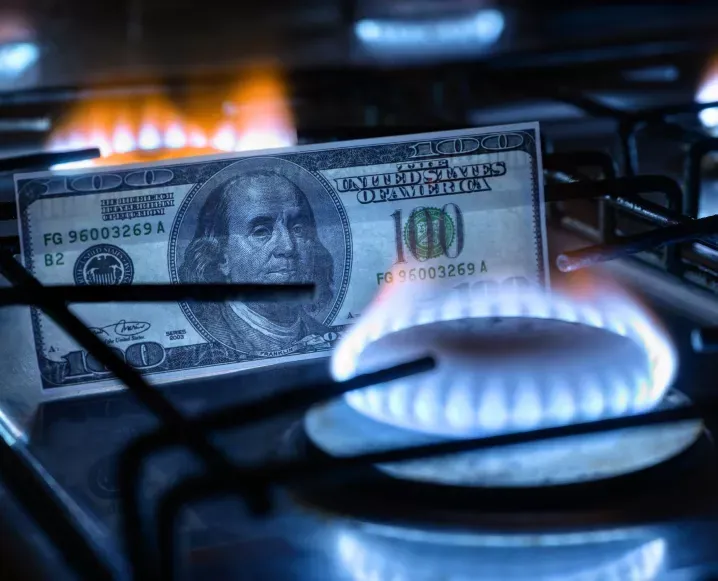
Natural gas prices are generally quoted in US dollars. That means wherever you are in the world, you’ll always pay for gas in US dollars. So, if you see gas has a spot price of 2.50, it’s currently trading for $2.50 in the underlying market.
If your trading account uses a currency other than US dollars, any trade you make will automatically convert into USD at the current market rate BEFORE making a purchase.
When you trade natural gas with FXTM (or any online broker), you’ll see that the ‘buy’ price is above the underlying spot price, and the ‘sell’ price is below the underlying. This is due to the spread, which is how we charge you for your trade.
What unit is natural gas traded in?
Natural gas is traded in million British thermal units (MMBtu). However, some countries measure it in Gigajoule and natural gas reports show units as Bcf, which is the abbreviation for billion cubic feet of gas.
What are gas futures?
Gas futures are contracts where a buyer and seller agree to exchange a specified amount of natural gas at a set price on a set date. They’re traded on exchanges and offer the possibility to capitalise on both rising and falling prices.
Companies often trade futures to lock in advantageous prices or protect against negative moves. However, they’re also popular with speculative traders. This is because they can settle the contract in cash, instead of taking delivery of the gas itself.
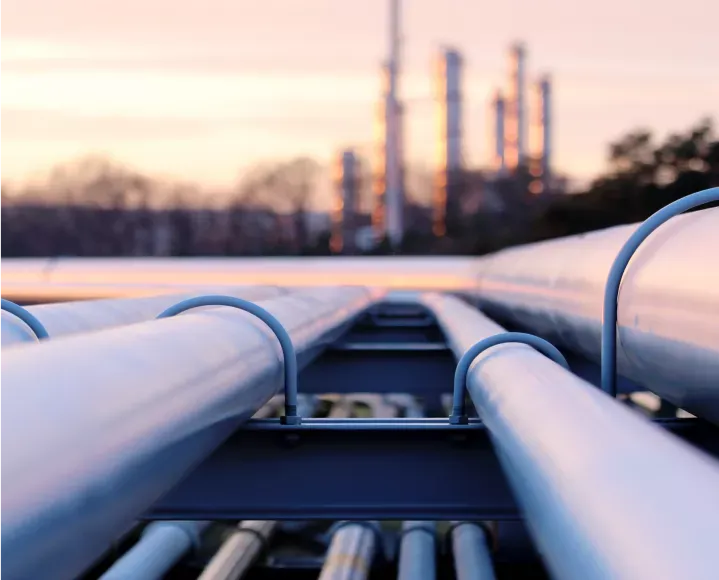
Natural gas futures are based on delivery at the Henry Hub in Louisiana, which is where multiple US pipelines meet. The contracts are worth 10,000 MMBtu of natural gas.
What are gas options?
Gas options are like a futures contract, except they come with no obligation to trade.
They give you the right to buy or sell an amount of gas at a set price on a set date, but you wouldn’t be contractually obliged to go through with it.
Natural gas stocks
You can also gain exposure to natural gas by buying natural gas stocks.
This would give you part ownership of companies that play a key role in the production, transportation or exportation of natural gas, or are closely involved in the sector.
Examples of natural gas stocks include ExxonMobil, Marathon and Chevron, all of which you can trade with FXTM.
Natural gas ETFs
Instead of buying individual natural gas stocks, you could buy natural gas ETFs. An ETF is a financial product that offers exposure to a basket of related assets from a single trade.
So, you could buy a natural gas ETF that holds shares in multiple companies involved in the industry.
This would give you diversified exposure to the natural gas sector, but you only have one position to manage.
Natural Gas industry overview
Natural gas extraction has improved significantly over the last few decades as technology and extraction techniques improve. This means it is easier than ever to respond to changes in demand.
It is likely that natural gas extraction will continue to become even more efficient as the industry advances in years to come.
The amount of gas in storage
When there’s plenty of natural gas in storage, it usually means there’s an excess supply, which suggests demand is low and prices will fall. On the other hand, if there’s limited gas in storage, it suggests supply is tight and prices will go up as demand is greater.
The weather
Severe weather events can interrupt gas production for days or even weeks at a time. This means that reserves will run low as supply gets used up, which would cause the price to increase.
Availability and prices of other energy sources
As the world starts to transition to cleaner energy sources, natural gas is seen as a stepping stone from coal and oil. The International Energy Agency predicts natural gas demand will rise 29% by 2040.
What impacts the price of gas?
Like almost all financial markets, the price of gas is primarily moved by the relationship between supply and demand. But due to gas’s essential role in the global economy, it can be the subject of drastic price swings depending on whether the market is growing or declining.
Here are a few of the major factors that can impact gas prices:
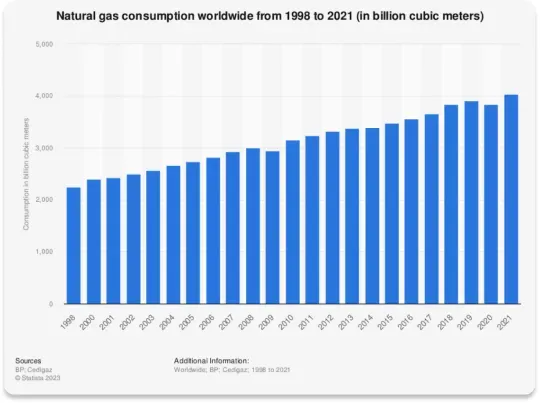
Global demand
The International Energy Agency reports that global natural gas demand will grow slowly up to 2025, as Russia’s war in Ukraine causes supply disruptions and pushes prices higher.
Source: Statista
Level of natural gas production
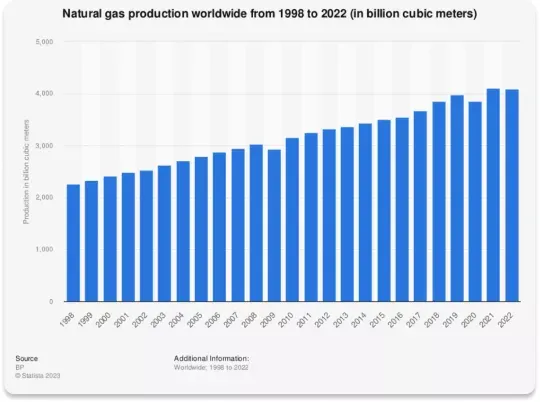
When gas production goes up, prices tend to decrease. This is because when gas is readily available, natural market forces work to reduce prices for consumers. As gas extraction techniques have massively improved over time – including the controversial “fracking” process – making it much quicker and easier to produce, it's generally worked to reduce gas prices.
Source: Statista
Popular gas trading strategies
Before you start trading gas, you’ll want to make sure you have a clear trading strategy to help support your decisions.
Here are a few popular strategies for trading gas as a commodity
Day trading
Day traders aim to make small profits on many trades throughout the day, allowing them to capitalise on multiple opportunities in a single trading session.
Due to its high volatility, natural gas trading is an attractive option for day traders – with the potential to make profit in a short time window.
Day trading is generally better suited to people who have plenty of time to commit. Successful day traders must keep their finger on the pulse of the market and pay close attention to anything that could affect gas prices.
Range trading
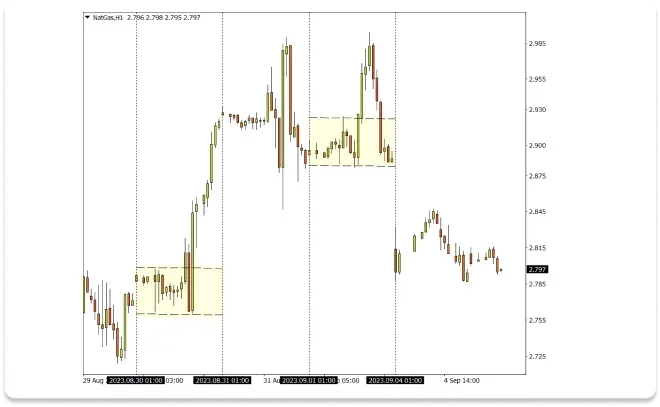
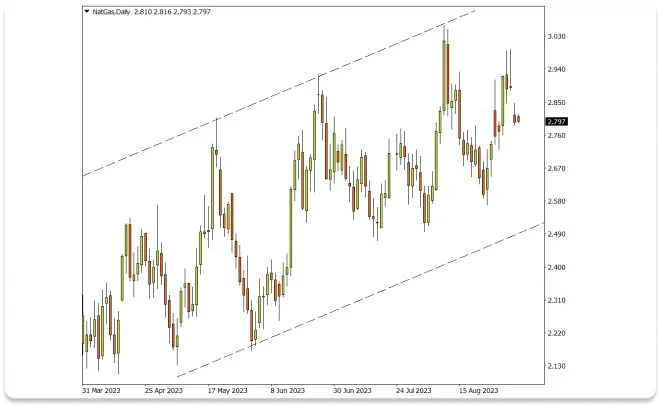
The concept of range trading is simple - traders look for an asset that has been trading within a certain range for a period. They then identify the levels of support and resistance within that range, which can be determined by analysing the asset's price movements over time.
Once the levels of support and resistance have been identified, traders will attempt to buy at the support level and sell at the resistance level.
Range trading is particularly effective in volatile markets (like gas) where there isn't a clear long-term trend in either direction.
Gas prices can fluctuate significantly within a range, providing traders with ample opportunities to buy and sell at the support and resistance levels. By using range trading, traders can take advantage of these fluctuations to generate profits.
Breakout trading
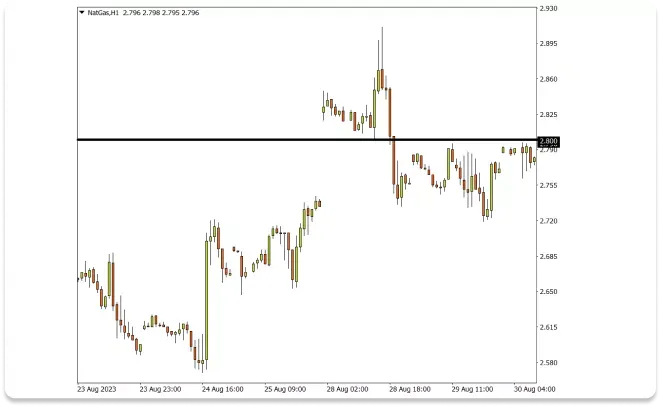
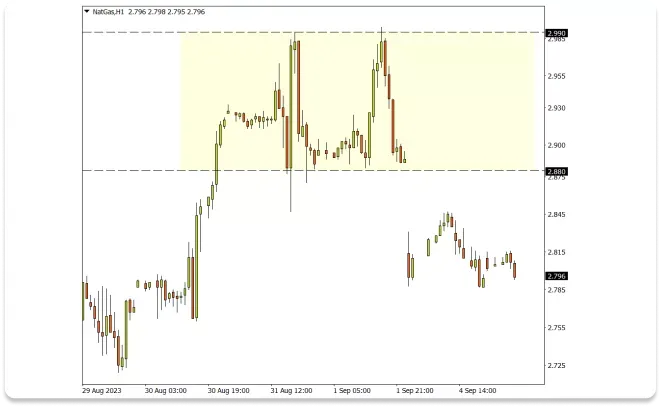
Breakout trading is a popular trading strategy used by traders to capitalize on sudden price movements in volatile markets. The idea behind breakout trading is to enter a position as soon as prices ‘break out’ of their current range. This is based on the belief that a breakout is a strong indicator that the price will continue moving further in that direction.
A breakout strategy can be used in both rising and falling markets, making it a popular choice for volatile markets like gas.
Swing trading
Swing trading is where a trader tries to profit from natural gas price movements over a period of a few days to several weeks.
Swing traders look to enter a position at the bottom or top of a move and capture the ‘swing’ higher or lower. They generally use technical analysis to identify support and resistance levels in the natural gas market.
Events for your calendar
How to trade gas with FXTM
Frequently asked questions
There are a few different ways you can trade natural gas. The most popular are gas spot prices, futures and options, but you can also gain exposure via stocks and ETFs. With FXTM, you can use CFDs to speculate on natural gas spot prices. Trading CFDs enables you to profit when prices rise or fall − and you don't have to own the actual gas yourself.
You can also gain exposure to natural gas by buying natural gas stocks. This would give you part ownership of companies that play a key role in the production, transportation or exportation of natural gas, or are closely involved in the sector.
Natural gas can be traded from 6:00pm EST until 5:00pm EST, Sunday through Friday − reflecting the Chicago, New York and London exchanges.